
NO TRASH
ALL TREASURE
When Trash Is Part of a System
2.1 Existing System and Broadened System
Shift the way you see or perceive solid waste; Waste is materials and materials are a commodity. -Julie Noble

Current Waste Management
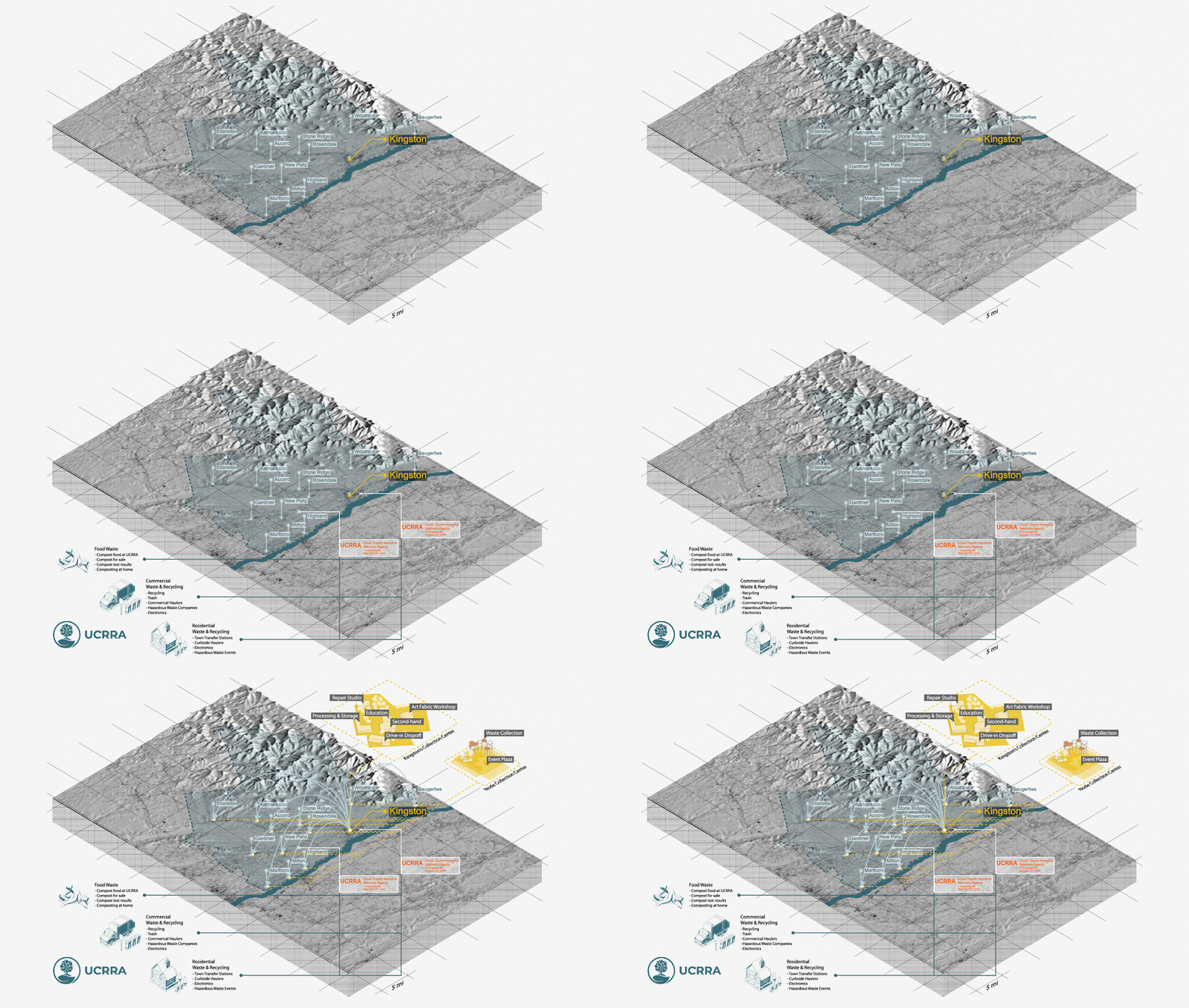
Currently, Kingston has a dual-stream recycling program that separates recyclable materials into two categories with tighter restrictions and changing demands of these materials. In addition, the recycling initiative research revealed that Kingston’s waste would be sent to a disposal site, Ulster County Resource Recovery Agency (UCRRA), and eventually go to landfill.
In order to form a well-operated waste management system, Kingston needs the repair and reuse sector, but currently, Kingston only participated in recycling. Kingston now has a well-developed recycling system, the UCRRA facility, and the dual-stream recycling system serves as the collecting part


Broadened
System
Knowing the absence of reuse and repair in Kingston, we propose a neighborhood-scale design to provide easy access for the residents and promote everyone’s participation. A central hub in Midtown Kingston is added to create a space that eliminates the idea of "trash" and engages residents by offering a diversified range of spaces and experiences that relate to the re-use and repurposing of "trash".
Based on the types of waste being collected, daily waste will be presorted at collection points and transported directly to UCRRA. Other wastes such as big refuses or electronic items are sorted to see whether they are good for reuse or not. If so, the waste will be transported to a newly-proposed central hub for repair, and the possibility to resell.
To upgrade the current system in Kingston and to promote the repair & reuse industry in the existing programs, this project adds a new collection system inside neighborhoods and a centralized site for repair and reuse. Therefore, a well-operated waste management system will be available in the town of Kingston, to meet the zero-waste target.

2.2 Design Overview

Community Collection Nodes
Community Collection Nodes aim to decentralize the waste management system, improve trash classification, and promote community engagement for waste recycling. With easy access and symbolic value, four types of nodes are designed to accommodate different neighborhoods: street corners, parking lots, intersections, and greenery patches. Collection Nodes will be placed inside neighborhoods so that each node covers roughly four blocks (five-min walk) for daily trash drop-off and also weekly/monthly collection events.


Collection Hub
The central Collection Hub provides full services for repairing used/broken items, with a repair studio, dropoff services, art fabrication workshops, secondhand store, open plazas for weekly/monthly events, and public space for Kingston residents. The site was chosen for its central location in the city, as well as for current land use and a great number of vacant lots. It sits at the intersection of Greenline park and many commercial venues. Abandoned industrial buildings will be repurposed.

Apply ti Region
With the replicability of the collection nodes’ design, and the idea of its implementation towards global scale. Here the participation on the county scale is the first approach. With the modular prototype, the design imagines the nodes can be anywhere after all, a role where other cities could follow this as a sample to achieve the goal of zero waste.