
CITY OF ENCLAVE
Instructor
David Shane
Location
Beijing, China
Year
Spring 2021
Team Work
Yuehui Du
Scarlet Nga Chin Tong
Rui Zhang
Xiaofei Sun
The objective of this case is to create a visual and verbal language for articulating how cities evolve through time. The concentration is on the practices and methods that drive initial growth and the creation of urban features, as well as how they are modified in subsequent iterations, innovations, or repeats. The relationships between these urban features and public space in different growth patterns and systems in the city, as well as the shifting/changing relationships between these growth centers.

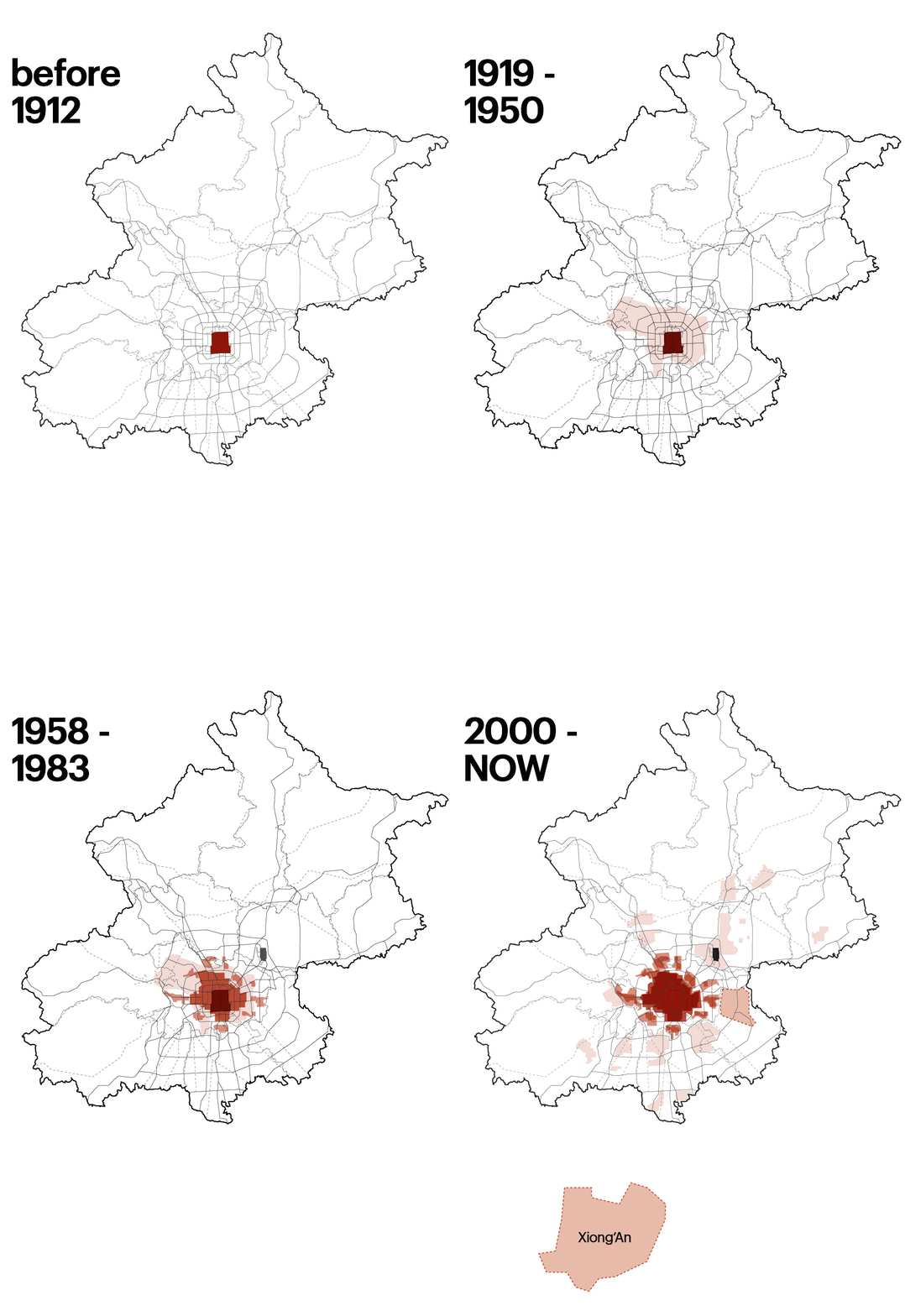
As the capital of the People’s Republic of China, Beijing has an extensive history as a symbol of power for the country. This timeline only highlights a few key dates that play a role in shaping the urban development of Beijing. It begins in the Qing dynasty, mapping the city's shift from imperial rule to that of the Nationalist Party in 1912 when it was not the capital. In 1949, PRC decided to name Beijing the capital of their new country. Throughout the telecitta and Metacity era, Beijing is seen to focus on decentralizing its sphere of influence to other parts of China through transportation infrastructure development.
In the Archcitta and Cinecitta era, Beijing was a city revolving around the imperial palace. Yet starting in the telecitta and continuing in the megacity phase, Beijing experienced rapid expansion in both urban areas as well as population.



PREVIOUS PAGE
NEXT PAGE
The Old City


PREVIOUS PAGE
NEXT PAGE
Residential Area


PREVIOUS PAGE
NEXT PAGE
Cultural


PREVIOUS PAGE
NEXT PAGE
Transportation


PREVIOUS PAGE
NEXT PAGE
The New Town


